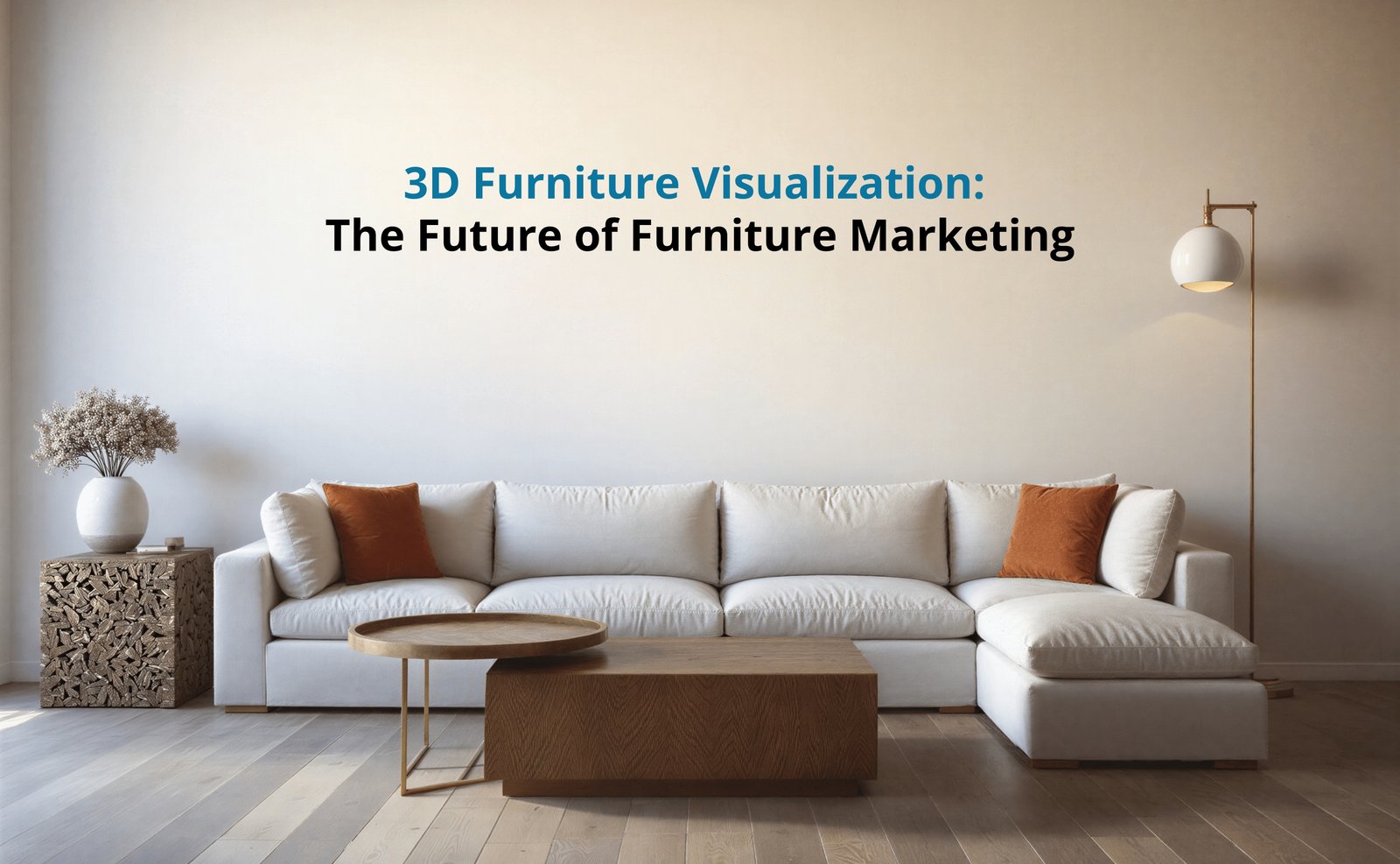
The furniture industry is undergoing a seismic shift. Gone are the days when expensive photoshoots, logistical nightmares, and static catalog images defined success. Today, we are entering a new era driven by digital precision and immersive experiences. 3D furniture visualization is not just a trend; it is rapidly becoming the backbone of modern furniture marketing strategies.
As consumer habits evolve, the demand for hyper-realistic, interactive, and instant visual content has skyrocketed. Consequently, brands that fail to adapt to these new standards risk falling behind. This article explores why 3D furniture visualization is the future and how it empowers retailers to sell more effectively in a digital-first world.
Why 3D Furniture Visualization is the New Standard
Traditionally, launching a new furniture collection required manufacturing physical prototypes, shipping them to a studio, and hiring professional photographers. However, this process is slow, costly, and inflexible. In contrast, 3D furniture visualization offers unparalleled speed and versatility.
By utilizing high-quality 3D furniture rendering, manufacturers can showcase products before they even exist in the physical world. For instance, if you want to display a sofa in 50 different fabric options, traditional photography would require 50 separate shoots. Conversely, 3D technology allows you to render these variations digitally in minutes.
Furthermore, services like 3D furniture silo rendering provide clean, studio-quality images perfect for e-commerce listings. Simultaneously, 3D furniture lifestyle rendering places those same products into beautifully designed virtual interiors, helping customers emotionalize the purchase without the cost of renting a physical location.
The Impact of High-Quality 3D Furniture Rendering on Sales
The primary goal of any marketing strategy is to convert browsers into buyers. Recent data suggests that high-quality visuals are the single most important factor in online furniture sales. In fact, retailers utilizing advanced 3D visuals have reported conversion rate increases of up to 94%.
Why does 3D furniture rendering have such a profound impact? The answer lies in buyer confidence. When customers cannot touch or sit on a piece of furniture, they rely entirely on visual cues. Photorealistic renders that show accurate textures, lighting, and stitching details bridge the gap between the screen and reality.
Reducing Returns with Precision
In addition to boosting sales, accurate visualization significantly reduces return rates. A major pain point for online furniture retailers is the “expectation vs. reality” gap. However, by providing precise 3D furniture visualization, customers know exactly what they are getting.
For example, 360° product views allow users to rotate an item and inspect it from every angle. This level of transparency ensures that the customer understands the product’s proportions and design, ultimately leading to higher satisfaction and fewer costly returns.
Enhancing Customer Experience with AR and Interaction
The future of marketing is immersive. Static images, while necessary, are no longer enough to captivate a tech-savvy audience. This is where furniture and product modeling for AR (Augmented Reality) comes into play.
Imagine allowing your customer to virtually place a coffee table in their own living room using their smartphone. This is no longer science fiction; it is a standard expectation for leading brands. By integrating AR-ready models, you transform passive viewing into an active, engaging experience.
Leveraging 3D Furniture Visualization for Video Content
Video content is king on social media platforms like Instagram and TikTok. 3D furniture and product animation allows brands to create cinematic product tours, assembly guides, or feature highlights without ever picking up a camera. These dynamic assets stop the scroll and drive higher engagement rates than static images ever could.
Future-Proofing Your Brand with 3D Assets
investing in 3D furniture visualization is also an investment in the longevity of your brand’s digital assets. Once a high-poly or low-poly model is created, it becomes a versatile digital asset (“digital twin”) that can be repurposed indefinitely.
Need a new catalog image? Re-render the model in a new setting.
Expanding to the Metaverse? Your 3D assets are ready for virtual showrooms.
Launching a configurator? The same models power the customization engine.
Therefore, building a library of 3D assets today prepares your business for the marketing channels of tomorrow.
Conclusion
The transition from traditional photography to 3D furniture visualization is inevitable. It offers cost savings, creative freedom, and a superior customer experience that drives sales. Whether through photorealistic 3D furniture rendering, interactive 360° views, or futuristic AR applications, the technology is reshaping how we buy and sell furniture.
To stay ahead of the curve, partner with experts who understand the nuances of this technology. At Blue Ribbon 3D Animation Studio, we specialize in bringing your furniture to life with cutting-edge rendering solutions.
Ready to transform your furniture marketing? Contact us today for a free sample or quote, and let’s build the future of your brand together.
