Introduction
Buying furniture online used to feel risky. Shoppers couldn’t touch the fabric or judge the true color.
That risk is fading fast. 3D Furniture Rendering Services now let US shoppers see furniture with startling accuracy before they buy.
At Blue Ribbon 3D, we work with furniture brands across the US who are rethinking how they present products online. This guide explains exactly what’s changing, and why.
We’ll cover the shift happening right now, the real numbers behind it, and what it means for brands still relying on traditional photography.
By the end, you’ll understand exactly where to start if your own catalog still relies on photo shoots alone.
Quick Answer
| 3D furniture rendering services let US brands replace costly photo shoots with reusable digital models. This cuts production costs, speeds up product launches, and gives online shoppers more accurate, detailed views before buying, directly reducing returns. |
Why Online Furniture Shopping Needed to Change
Furniture is a hard category to sell online. Shoppers can’t sit on it or feel the fabric.
Photos alone often fail to capture true scale. A sofa can look smaller or larger than it really is in a flat image.
This mismatch between expectation and reality has always driven furniture returns higher than most other online categories.
3D rendering directly targets this problem, giving shoppers a clearer, more accurate sense of a product before it ships.
The shift accelerated once rendering quality caught up to real photography. A few years ago, 3D furniture images often looked slightly artificial. That gap has mostly closed in 2026.
What 3D Furniture Rendering Actually Does
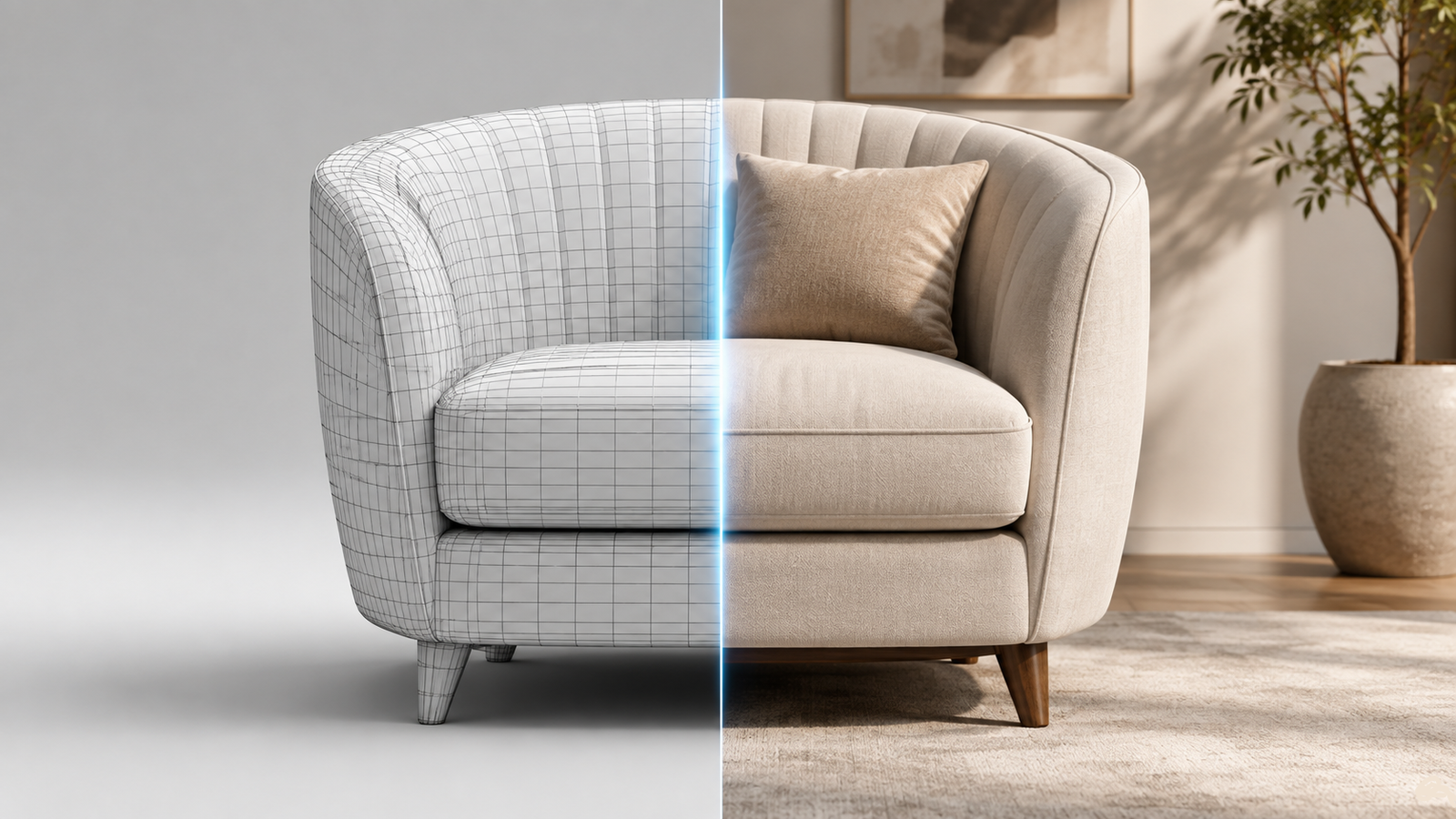
It builds a digital model of a furniture piece. Artists then add real materials, textures, and lighting.
The result looks like a studio photo. No physical sample or photography studio is required to produce it.
Once built, that same model can generate new colors, angles, or room settings instantly.
This flexibility is the core reason US brands are switching so quickly in 2026.
The technical process starts with precise measurements. Every dimension gets modeled to match the real product, since inaccuracies become obvious once shoppers zoom in.
From there, artists apply materials that match the actual product finish, whether that’s a matte wood grain or a glossy fabric weave.
Cost Savings Driving the Shift
Traditional furniture photography needs a studio, a photographer, and physical samples of every color option.
Studio rental alone often runs $500 to $1,500 per day in major US cities.
A single day’s shoot, including styling and editing, can easily exceed $3,000 for just a handful of products.
3D rendering shifts this cost structure. The heavy investment happens once, during modeling, not every time a new angle or color is needed.
Brands managing catalogs of hundreds or thousands of SKUs see the biggest savings, since the cost-per-product drops sharply at scale.
Speed: Launching Products Faster
Physical samples take weeks to manufacture before a photo shoot can even happen.
A 3D model can be ready before the first physical unit exists.
This lets brands list new furniture online the same week it’s announced, not a month later.
This speed advantage matters most during high-demand seasons, like the run-up to major holiday sales.
Brands launching a new collection ahead of the holidays can start marketing and pre-selling well before inventory physically exists in a warehouse.
Reducing Returns With Accurate Visuals
Furniture returns are expensive. Bulky items cost far more to ship back than smaller products.
Accurate 3D visuals set correct expectations for size, color, and texture before checkout.
This directly reduces returns caused by products looking different than expected once delivered.
Every prevented return has an outsized impact on margin, given how expensive furniture logistics can be.
Return shipping for large furniture often involves freight costs, restocking fees, and sometimes total write-offs if items get damaged in transit.
Interactive Shopping Features US Buyers Now Expect
Static photos are no longer enough for many shoppers.
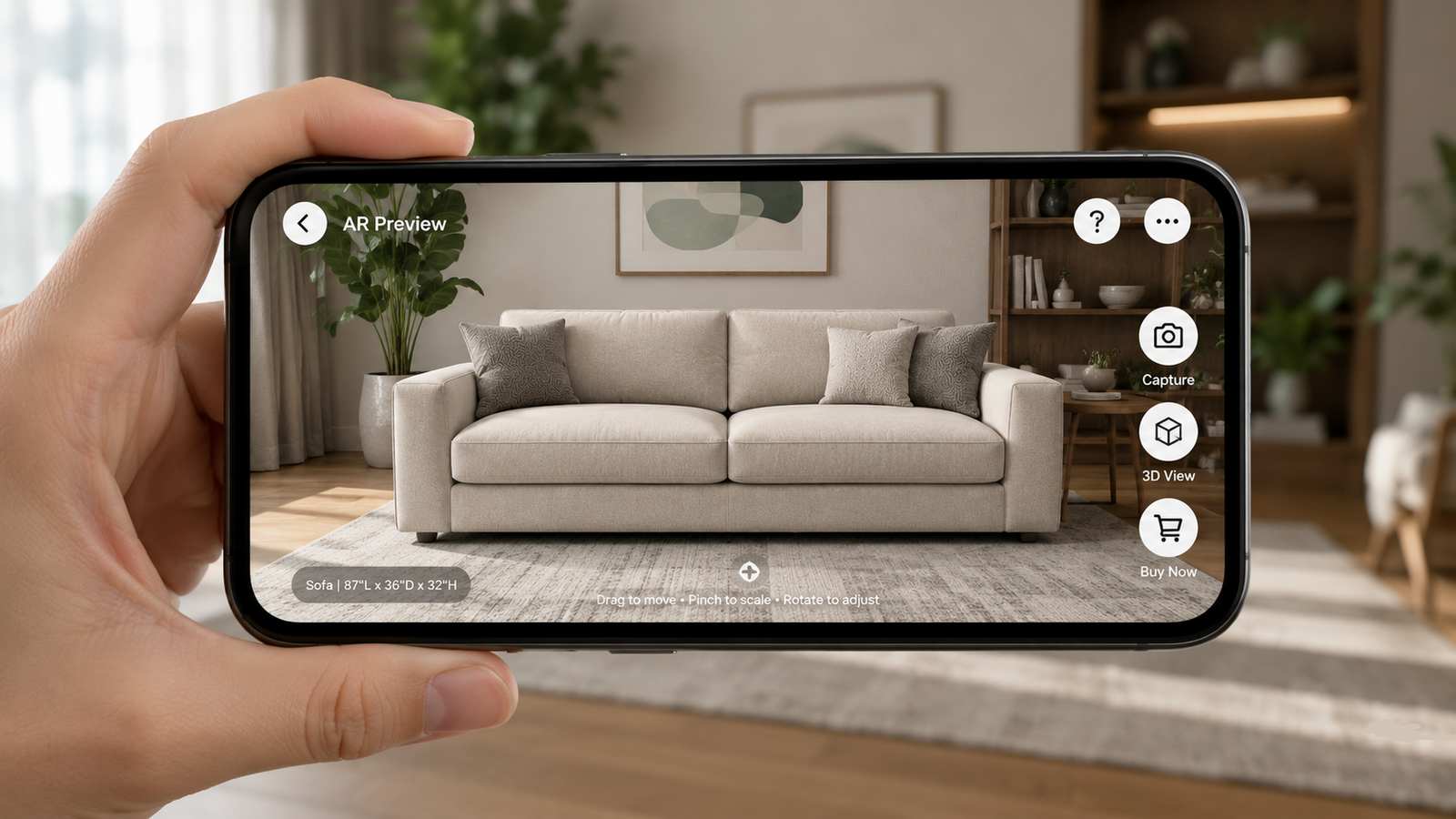
360° rotating views and AR “view in your room” features are becoming standard on major retail sites.
Both features rely on a strong 3D model as their foundation. Without one, neither feature works well.
Brands that already have 3D assets can add these features quickly, without starting production from scratch.
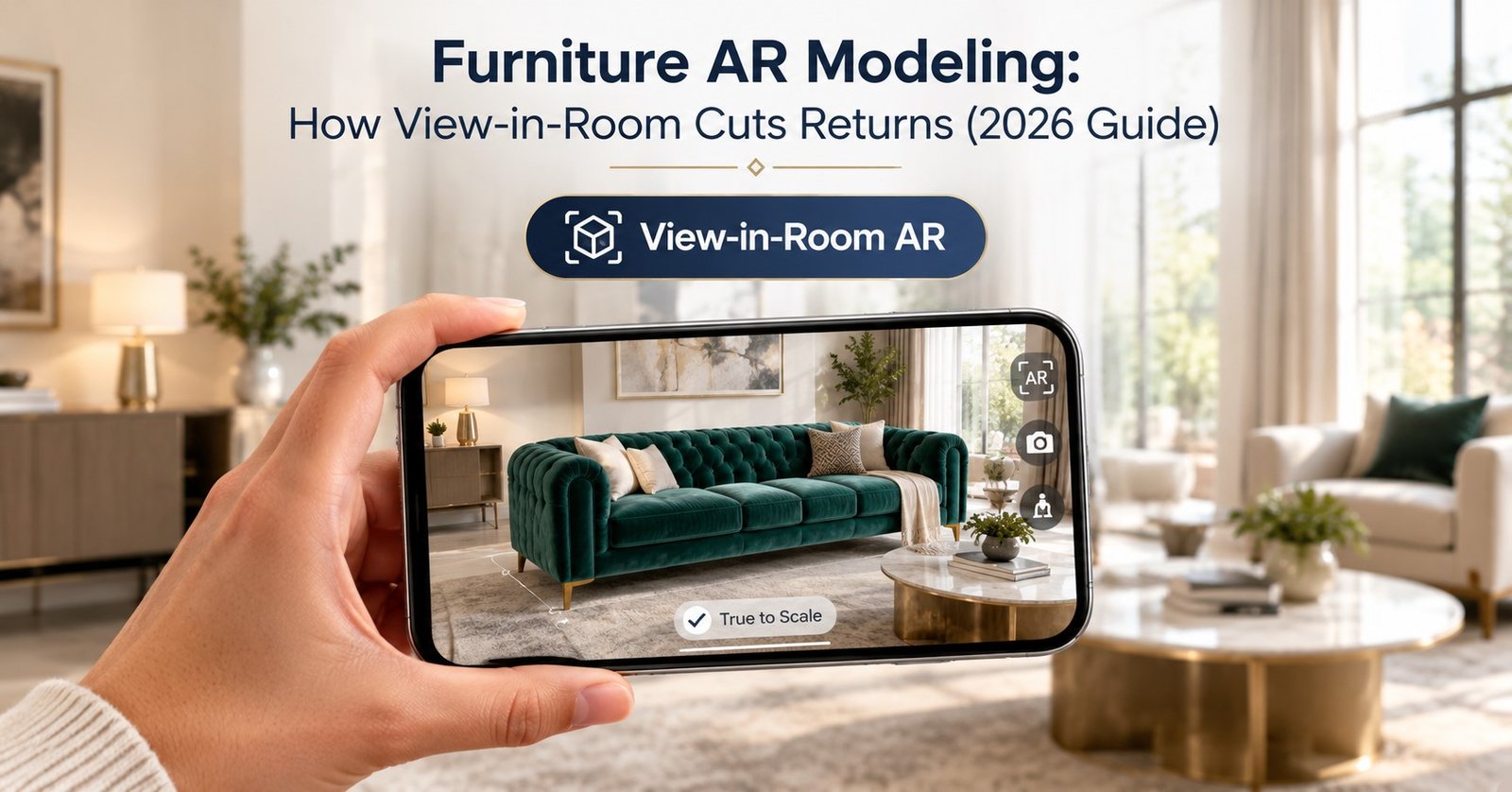
AR features especially have reduced checkout hesitation for many retailers, since buyers feel more confident about size and fit before purchasing.
Consistency Across a Growing Catalog
Photography from different shoots often looks slightly inconsistent in lighting and color grading.
3D rendering uses the same lighting setup across an entire catalog.
This keeps every product page feeling professionally unified, even across hundreds of listings.
Shoppers browsing a full catalog notice this consistency, even if only subconsciously.
This matters even more for brands selling across multiple platforms, since each marketplace often has different image requirements.
A unified visual style also strengthens brand recognition. Shoppers start associating a certain look and lighting style with a specific brand over time.
In-House vs. Outsourced Rendering Teams
Brands face a choice once they commit to 3D rendering. Build an in-house team, or outsource to a specialized studio.
In-house teams offer tight control. Feedback loops move fast, since artists sit close to the marketing team.
But in-house teams are expensive to build. Skilled 3D artists, software licenses, and powerful workstations all add up quickly.
Outsourced studios skip this setup entirely. Brands pay per project or per product, with no fixed overhead.
This makes outsourcing the practical choice for most furniture brands, especially those still testing whether 3D visualization fits their catalog.
Meeting Marketplace Image Requirements
Different online marketplaces have different rules for product photos.
Some require pure white backgrounds for primary listing images. Others allow full lifestyle scenes.
A flexible 3D asset handles both easily. The same render can export with a white background for compliance, or a full room setting for a brand’s own website.
This adaptability saves significant back-and-forth with marketplace compliance teams, since assets reformat quickly without new photography.
Amazon, Wayfair, and other major US furniture marketplaces each have slightly different technical requirements. A flexible 3D asset library handles all of them from one source file.
How US Furniture Brands Are Getting Started
Most brands don’t convert their entire catalog at once.
A common approach is starting with the 10 to 20 bestselling products first.
This lets a brand measure real conversion and return rate changes before committing to a full rollout.
Once results look strong on top sellers, scaling to the rest of the catalog becomes a much easier decision.
Most studios can turn around a pilot batch of 10 to 20 products within one to two weeks, giving brands real data within a month of starting.
Choosing the Right Rendering Partner
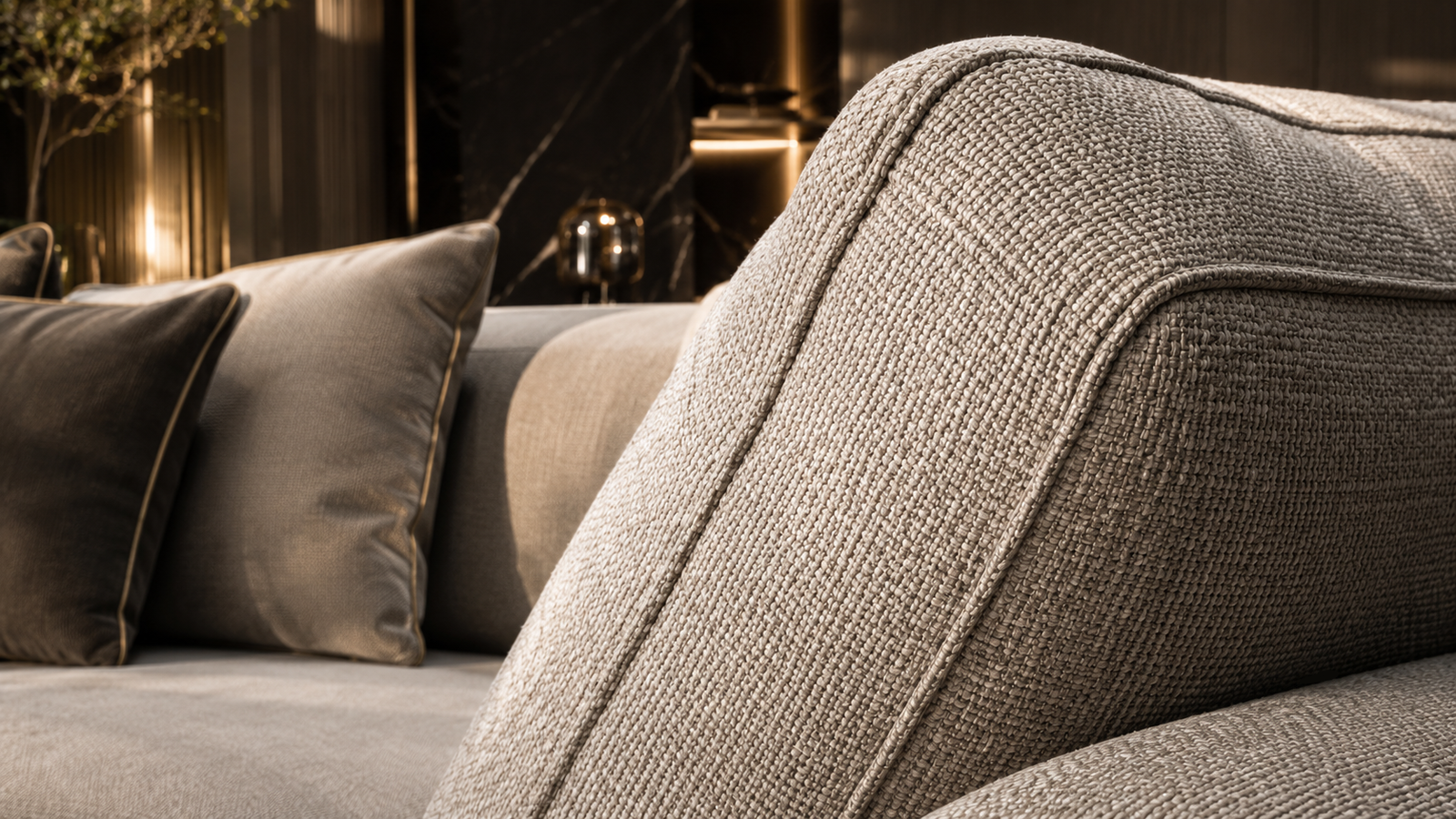
Quality varies significantly between studios. Check these details before choosing one.
- Material accuracy, especially fabric texture up close
- Lighting consistency across the full catalog
- Turnaround time for larger batch orders
- A clear revision policy if a color or texture doesn’t match
You can review examples through Blue Ribbon 3D’s furniture rendering services to see the level of detail a strong studio should deliver.
Measuring the Impact After Switching
Track a few key numbers after moving a product’s images to 3D.
- Conversion rate on the product page, before and after the switch
- Return rate for that specific product over the following months
- Time spent on the product page, an indicator of shopper engagement
Give the data at least four to six weeks to stabilize. Early spikes or dips can be noise rather than a real trend.
Most brands see conversion improvements within the first month. Return rate improvements often take longer to show clearly, since returns lag behind purchases by weeks.
Frequently Asked Questions
What are 3D furniture rendering services used for?
They create photorealistic furniture images without a physical photo shoot, used for e-commerce listings, marketing, and interactive product views that help shoppers make confident buying decisions.
How much do 3D furniture rendering services cost?
Pricing typically ranges from $50 to $400 per product, depending on detail level and how many angles or colors are needed. Volume discounts often apply for larger catalogs.
Is 3D rendering as accurate as real photography?
Yes, when done by an experienced studio. Material texture and lighting can closely match real photography at normal viewing size, making it hard to tell the difference.
Do I need a physical sample to get started?
No. Studios can build accurate models from technical drawings and dimensions alone, which is especially useful for pre-launch products that don’t exist physically yet.
How long does furniture 3D rendering take?
A single product typically takes two to five days. Larger catalog projects take longer but can be batch-processed efficiently once the first few models are approved.
Does 3D rendering reduce furniture returns?
Yes. Accurate scale, color, and texture representation helps set correct buyer expectations, which reduces returns caused by product mismatch, one of the most common return reasons in furniture e-commerce.
Can small furniture brands afford 3D rendering?
Yes. Studios typically charge per product, so small brands can start with just their bestsellers instead of committing to a full catalog upfront.
Conclusion
Online furniture shopping in the USA looks different in 2026 than it did even two years ago. 3D Furniture Rendering Services now sit behind much of that change.
Brands adopting this technology early are launching faster, spending less on photography, and building more buyer trust than competitors relying on traditional photos alone.
The brands winning online today aren’t necessarily making better furniture than their competitors. Often, they’re simply presenting it better, with visuals shoppers can trust before they ever sit on the product in person.
Explore 3D Furniture Rendering’s services to see how a single rendering partner can modernize your entire catalog.
Related posts

Furniture Tariffs 2026: How US Brands Launch With 3D Renders Before Inventory Lands
Introduction Most advice on furniture tariffs 3D renders starts with price. This guide starts with ti …

3D Furniture Rendering Services USA: 2026 Buyer’s Guide to Specs and Pricing
Introduction Buying 3D furniture rendering services USA should feel simple. Send a product. Receive p …