Introduction
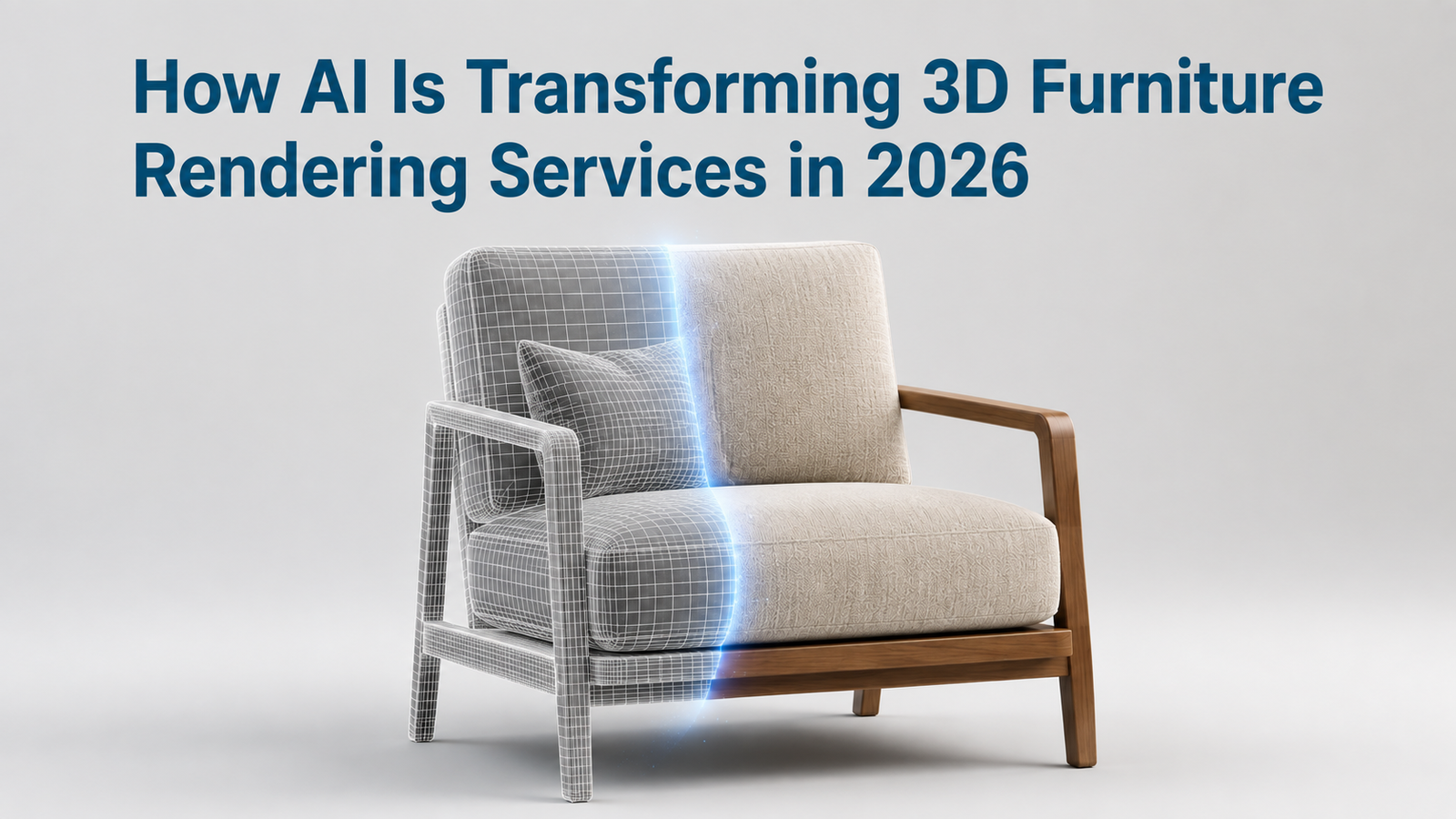
If you run a furniture business, you already know the drill: physical samples, studio bookings, a photographer, and days — sometimes weeks — of waiting before you have a single usable product image. It’s slow, it’s expensive, and it doesn’t scale well once your catalog grows past a handful of SKUs. Over the past couple of years, that’s started to change. Professional 3D Furniture Rendering Services now combine tried-and-tested 3D modeling techniques with AI-powered tools, and the result is faster, more flexible furniture visuals than photography alone could ever deliver.
This isn’t about AI replacing 3D artists — it’s about giving them faster tools. In 2026, if you’re a furniture manufacturer, an e-commerce brand, a designer, or a marketer, it’s worth understanding how AI actually fits into the rendering process, because it’s quietly becoming part of how the whole industry produces visuals now.
Key Takeaways
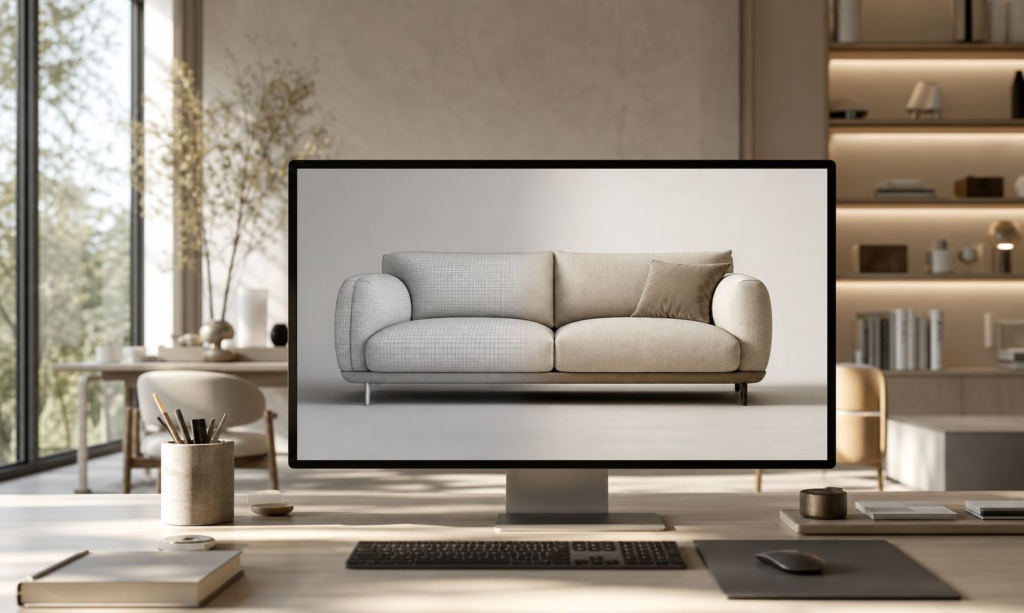
- AI is accelerating parts of the 3D rendering pipeline — it is not replacing skilled 3D artists.
- Photorealistic furniture renders can now be produced with faster turnaround than traditional photography.
- AI tools make color, fabric, and material variations far easier to generate at scale.
- Lifestyle scenes and room visualizations benefit significantly from AI-assisted environment generation.
- AI-powered visualization is becoming a core part of furniture e-commerce and AR shopping experiences.
- Human oversight remains essential for accuracy, brand consistency, and final quality control.
- The future points toward real-time, interactive, and more personalized furniture visualization.
In this post: What 3D rendering services are → How AI is changing the process → AI vs traditional rendering → Benefits & limitations → What’s next → FAQs
What Are 3D Furniture Rendering Services?
3D Furniture Rendering Services refer to the process of creating photorealistic digital images of furniture using 3D modeling and rendering software, built from CAD files, technical drawings, or reference photos rather than physical photography. A trained 3D artist builds a virtual model of the piece, applies accurate materials — wood grain, fabric weave, metal finish — and renders it under simulated lighting to produce an image that looks like a real photograph.
This applies to individual product shots, styled room scenes, and even short animations. It’s the same foundational skillset used in 3D furniture modeling, just extended into the lighting and finishing stage that turns a base model into a usable marketing image.
How AI Is Changing 3D Furniture Rendering in 2026
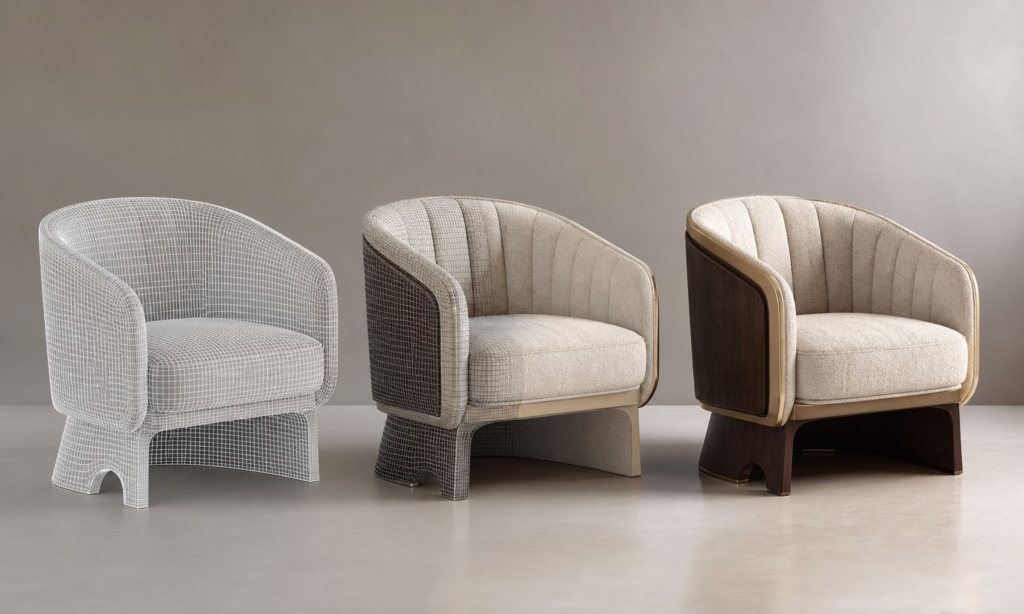
AI isn’t replacing the rendering pipeline — it’s compressing parts of it. Here’s where that’s showing up in practice.
Faster Furniture Visualization
AI-assisted tools are cutting down some of the most time-consuming parts of a traditional rendering workflow, particularly texture generation, lighting setup, and image upscaling. Work that used to take a render artist hours of manual tweaking can now be partially automated, freeing up time for the creative decisions that actually matter — camera composition, material accuracy, and scene mood.
More Photorealistic Product Images
Modern AI-assisted rendering engines use machine learning to better predict how light interacts with complex materials — glass, brushed metal, woven fabric — producing results that are harder to distinguish from real photography than earlier-generation 3D renders. This has a direct effect on photorealistic furniture rendering quality across the industry, even for smaller studios without large production budgets.
Easy Color and Material Variations
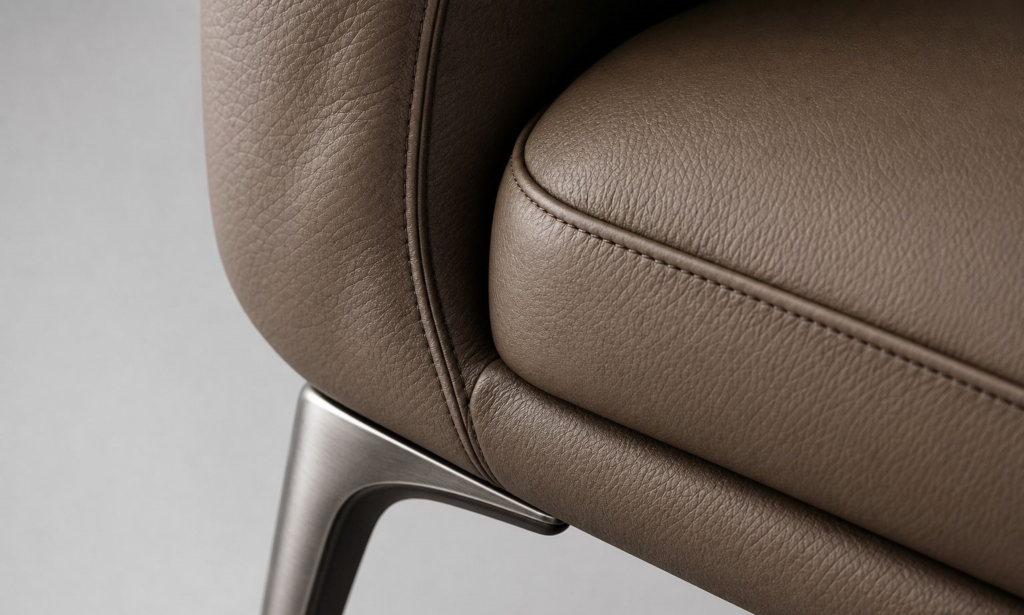
One of the more practical AI applications is variation generation. Instead of manually rebuilding a scene for every fabric option, AI-assisted tools can help generate multiple color and material versions of the same base render far faster than starting each one from scratch — useful for brands offering a sofa in fifteen upholstery choices.
AI-Powered Lifestyle Furniture Scenes
Styled room scenes — a sofa in a sunlit living room, a dining set in a modern kitchen — traditionally required building an entire environment by hand. AI-assisted scene generation is starting to speed up parts of this process too, helping artists populate backgrounds, adjust lighting mood, and test different interior styles faster than before. This is a core part of lifestyle furniture rendering, which helps buyers picture a piece inside a real home rather than isolated on a plain background.

AI and Furniture E-commerce
For online furniture retailers, faster and more flexible rendering directly supports furniture e-commerce visualization — more product variants shown, faster catalog updates, and richer product pages without a proportional increase in production cost. This matters most for brands managing large or frequently changing catalogs, where photography simply can’t keep pace.

3D Rendering, AR and Interactive Product Experiences
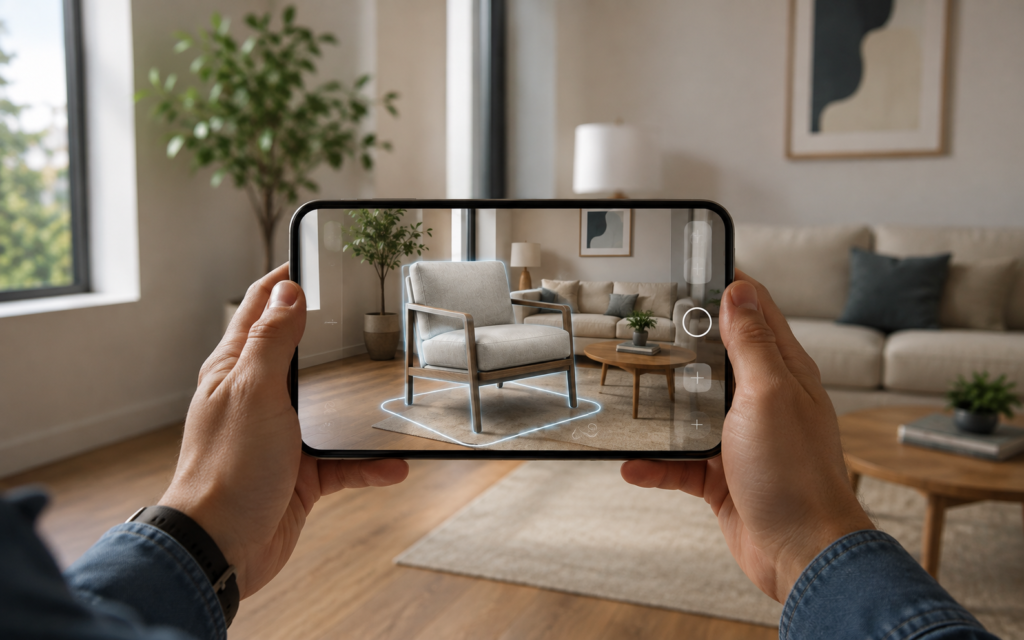
AI is also feeding into how furniture is experienced beyond static images. AR furniture visualization lets shoppers preview a piece in their own room through a phone camera, while 360° product visualization and interactive 3D configurators let customers rotate a piece or change its fabric and see the result instantly — both built from the same underlying 3D models used for standard renders.
AI Furniture Rendering vs Traditional Rendering
Neither approach fully replaces the other — most professional studios now blend both. Here’s how they compare across the factors that matter most to furniture brands.
| Factor | AI-Assisted Rendering | Traditional Rendering / Photography |
| Speed | Faster for variations and repetitive tasks | Slower, especially across multiple variants |
| Realism | Increasingly strong and improving quickly | High, but dependent on artist skill and setup time |
| Customization | Easy to generate multiple versions quickly | Each variation requires manual rebuild or a new shoot |
| Product Variations | Scales well across large catalogs | Costly and time-intensive at scale |
| Workflow | Blends automation with artist oversight | Fully manual, artist-driven from start to finish |
| Cost Considerations | Can lower per-image cost at scale | Higher cost per variant, especially with physical photography |
| Human Creative Control | Still essential for accuracy and final polish | Full creative control throughout, but slower iteration |
Benefits for Furniture Brands
For furniture brands managing dozens or hundreds of SKUs, rendering efficiencies compound quickly. A single well-built 3D model can support silo shots, lifestyle scenes, and even short animations, cutting down the need for repeated physical production every time a new finish or fabric is introduced.
- Faster turnaround on new product launches and seasonal catalog updates
- Lower cost per image when generating multiple color or material variants
- More consistent lighting and quality across a large product catalog
- Easier testing of different lifestyle scenes and styling directions
Stronger support for 3D product visualization across marketplaces, ad creative, and social content, plus a better foundation for AR and interactive shopping experiences as those tools become more common.
Limitations of AI Furniture Rendering
AI-assisted tools speed up parts of the rendering process, but they don’t replace the judgment of a trained 3D artist. Furniture has to be dimensionally accurate — a chair that looks right but is subtly the wrong scale creates real problems for a buyer relying on that image to judge fit. Materials also need careful, deliberate work: wood grain direction, fabric drape, and metal reflectivity all require an artist’s eye to look convincing rather than uncanny.
Brand consistency is another area where automation alone falls short. A furniture brand’s visual identity — lighting mood, color grading, composition style — needs to stay consistent across hundreds of images, and that’s a creative direction decision, not something AI tools handle independently. Professional 3D artists and designers remain essential for:
- Verifying product dimensions and geometry accuracy
- Selecting and calibrating realistic materials and textures
- Maintaining consistent brand style across a full catalog
- Final quality control before images go live
Studios like Blue Ribbon 3D combine AI-assisted tools with experienced 3D artists precisely because both pieces matter — automation for speed, human oversight for accuracy and polish.
The Future of 3D Furniture Rendering Services
Looking ahead, several trends are likely to shape how furniture visualization develops:
- AI-assisted 3D modeling that speeds up the initial model-building stage from CAD files
- Image-to-3D workflows that can generate rough 3D models from reference photos, cutting down early production time
- Real-time visualization tools that let designers and clients see lighting and material changes instantly
- Expanding AR furniture experiences that go beyond simple room previews into more detailed, interactive placement tools
- Interactive 3D configurators becoming standard on more furniture e-commerce sites, not just premium ones
- More personalized product visualization, where a shopper’s own room dimensions or style preferences inform what they see
- Continued growth in furniture e-commerce visualization as more buying decisions move entirely online
- Automated generation of routine product variations, freeing artists to focus on hero shots and new designs
None of this points toward removing the artist from the process — it points toward artists spending less time on repetitive technical work and more time on the creative decisions that actually shape how a brand looks.
Frequently Asked Questions
Question: What are 3D Furniture Rendering Services?
Answer: 3D Furniture Rendering Services create photorealistic digital images of furniture using 3D modeling and rendering software, built from CAD files or reference images instead of physical photography. They’re used for product listings, marketing content, and lifestyle scenes across furniture e-commerce and marketing.
Question: How is AI changing furniture rendering?
Answer: AI is speeding up specific parts of the rendering pipeline — texture generation, lighting adjustments, and variation creation — while artists continue handling model accuracy, material selection, and creative direction. It’s an acceleration of the process, not a replacement for it.
Question: Can AI create photorealistic furniture renders?
Answer: Yes, AI-assisted rendering engines can produce highly photorealistic results, particularly for lighting and material simulation. Achieving consistently accurate, brand-ready images, however, still typically requires a trained 3D artist reviewing and refining the output.
Question: How does AI improve furniture visualization?
Answer: AI improves furniture visualization mainly through speed and scale — generating color variations, adjusting lighting, and populating lifestyle scenes faster than fully manual workflows, helping brands produce more visual content without proportionally increasing production time.
Question: Is AI furniture rendering better than traditional rendering?
Answer: Neither fully replaces the other. AI-assisted rendering tends to be faster and more scalable for variations, while fully artist-driven rendering offers more granular creative control. Most professional studios now blend both approaches.
Question: How can 3D rendering help furniture e-commerce?
Answer: 3D rendering helps furniture e-commerce by making it easier to show more product variants, update catalogs quickly, and support AR or interactive previews — all of which can improve buyer confidence without the cost of repeated physical photoshoots.
Question: What is the future of AI-powered furniture visualization?
Answer: The future points toward real-time rendering, interactive 3D configurators, AR-based room previews, and more personalized visualization, with AI handling more repetitive technical work while artists focus on creative direction and quality control.
Question: Do furniture brands still need professional 3D artists if they use AI tools?
Answer: Yes. AI tools handle speed and repetitive tasks well, but accurate dimensions, realistic materials, and consistent brand styling still depend on experienced 3D artists reviewing and refining the final output.
Question: What furniture visualization formats benefit most from AI assistance?
Answer: Product variations (colors, fabrics, finishes) and lifestyle scene generation tend to benefit the most, since these involve repetitive work that AI tools can help accelerate without sacrificing much quality.
Question: Is AI-assisted rendering more affordable than traditional photography?
Answer: It can be, particularly for brands needing multiple product variants, since one 3D model can generate many renders without the cost of new physical samples or studio time for each variation.
Conclusion
Here’s the honest takeaway: AI isn’t rewriting the rules of furniture visualization overnight, but it is quietly making an already valuable process faster and more scalable. If you’re running a furniture business, the practical move is straightforward — 3D Furniture Rendering Services built around a smart mix of AI-assisted tools and real human oversight are becoming the most efficient way to get high-quality, consistent visuals without blowing your production budget.
The brands getting the most out of this shift are the ones using AI to speed up their 3D artists, not replace them. As real-time rendering, AR previews, and interactive configurators keep maturing, businesses that build a solid rendering workflow now will be ready to adopt these tools as they become standard — instead of scrambling to catch up later.
Related posts

3D Furniture Rendering Services USA: 2026 Buyer’s Guide to Specs and Pricing
Introduction Buying 3D furniture rendering services USA should feel simple. Send a product. Receive p …
